
Concept
Creating kinetic sculptures that captivate and engage is what I’m all about. I’m always on the lookout for fresh, innovative ways to craft pieces that not only grab attention but hold it, inviting viewers to experience them in new, dynamic ways.
The journey starts in the digital realm, where I experiment with overlapping shapes and forms using animation software. I’m constantly searching for that perfect visual effect—something that sparks curiosity and keeps the viewer’s focus for as long as possible. This is the stage where the magic of the idea really begins to take shape.
Construction
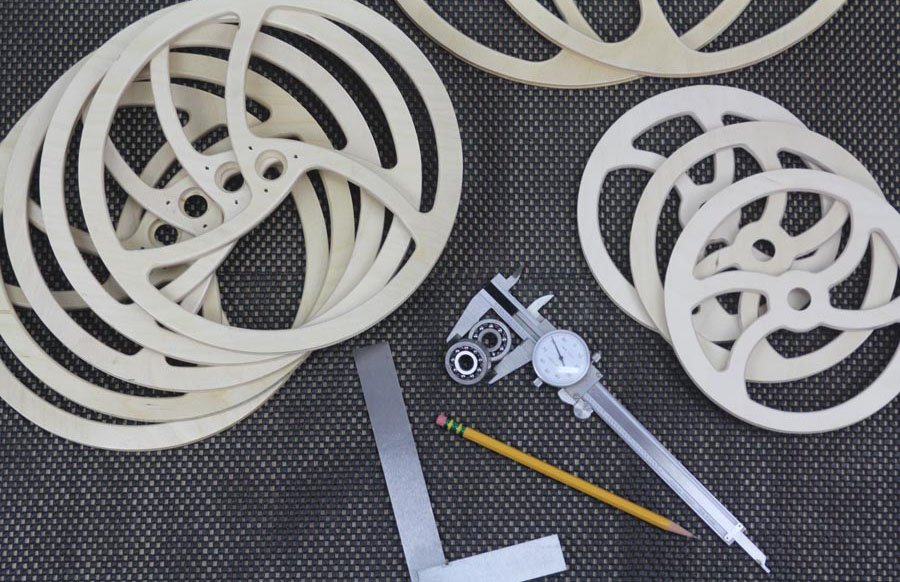
Once I’ve settled on a concept, the real hands-on work begins. The fabrication process is all about bringing those digital ideas into the physical world. I carefully plan each part of the sculpture, deciding on what materials are needed and how everything will connect. All the components are then arranged in preparation for precision cutting, using software to lay them out on metal sheets, laminated Baltic birch, or solid maple. When it comes to sculpture, balance is key, so the precision of each cut is critical for the final result.
For my E-series (electric) sculptures, I take it a step further. Not only do I design and build the sculpture, but I also handle the entire electrical side of things—from the circuitry to the installation of all the electronic components. It’s all about creating a seamless integration between form and function.
Once the parts are cut, I move on to the finishing touches. Every piece is carefully sanded to a fine grade, and I stain the wood pieces rather than painting them. This way, the natural grain of the wood is preserved, adding a more refined, authentic look. All wood surfaces are sealed with four coats of polyurethane in a dust-free spray booth to ensure durability and a high-quality finish.
When it comes to hardware, I use polished brass for the posts and mechanical components. It’s a step that elevates the sculpture's overall look and guarantees longevity, setting it apart from lower-quality sculptures that use wood for mechanical parts. The metal components, carefully prepped aluminum, are covered with multiple layers of a polymer coating for an extra layer of protection and aesthetic appeal.
Finally, the sculpture is assembled and balanced in my studio. I test it thoroughly, ensuring that it performs exactly as intended, moving fluidly and precisely. Only after this meticulous process is it carefully packed and prepared for shipping, ready to bring its kinetic magic to its new home.